Global Poverty Shifts: Africa, Children Bear Brunt of Extreme Poverty
The World Bank article describes how features of extreme poverty have changed in the last ten years, utilizing the recently updated Global Monitoring Database. The GMD is the world’s largest harmonized household survey database, including data from over 150 countries. Unfortunately, while worldwide poverty levels have declined overall, the new data demonstrate that there have been dramatic changes in both where the concentrated areas of poverty are and who is most affected by said poverty. This information will be of great value when policymaking has to be created or when programs must be developed in the future. One of the key findings revealed through this analysis is how the concentration of extreme poverty has been rising rapidly in low-income countries when compared to the overall global extreme poor population being located elsewhere throughout the world.
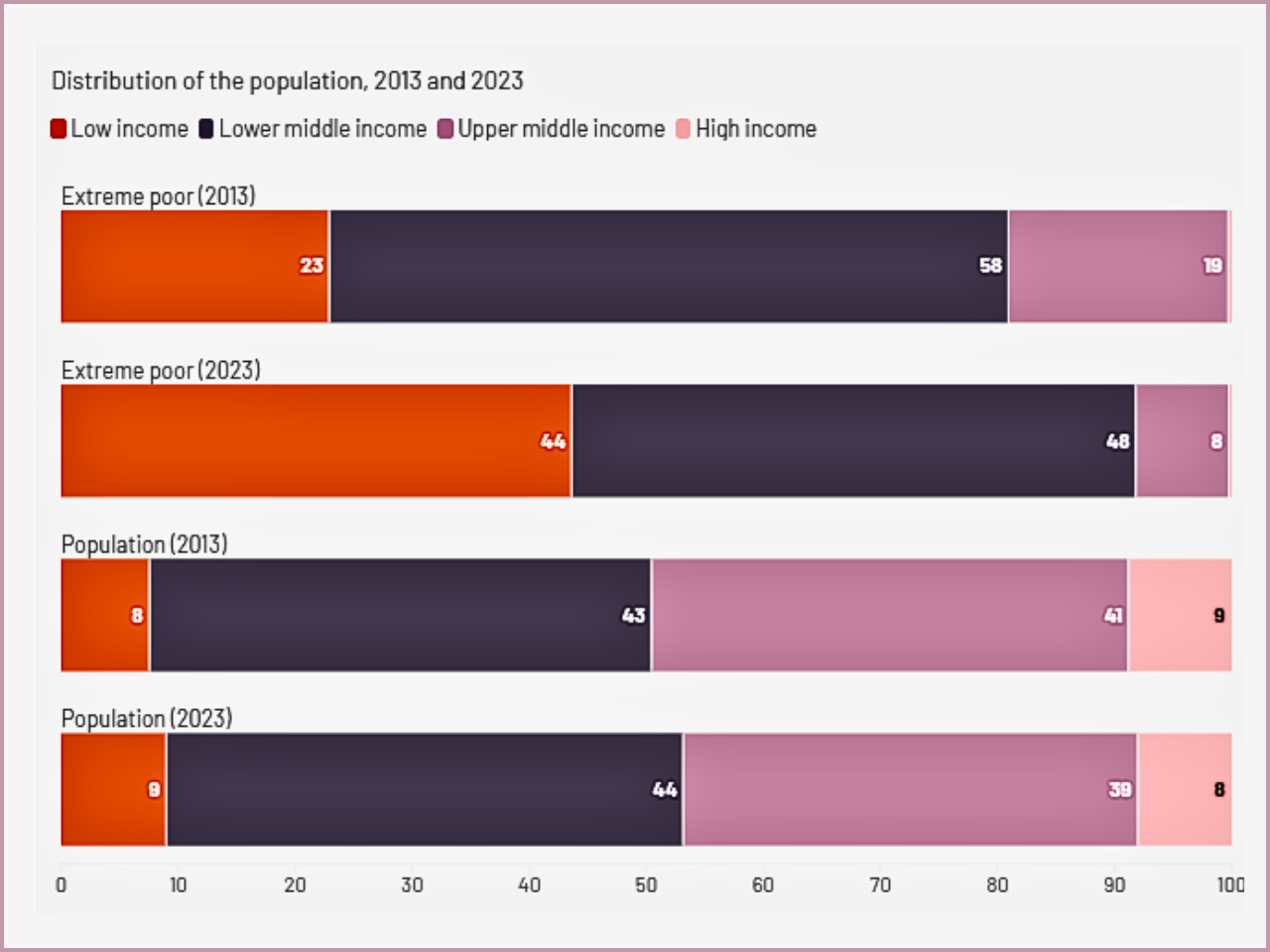
Even though the share of the global population living in low-income countries has only grown from approximately 8% of the global population in 2013 to an estimated 9% of the global population in 2023, there has been a near doubling of the proportion of the global extreme poor residing in low-income countries (from 23% in 2013 to 44% in 2023). In the past, large numbers of the world’s extreme poor resided in lower-middle-income countries, but now, poverty is more concentrated in the very poorest economies around the world. This trend is reflective of greater poverty reduction progress being made by middle-income countries relative to low-income countries (which continue to face numerous structural and environmental challenges, as well as the speed of economic growth). A significant change in poverty trends has been the rise in geographical concentration of poverty in Sub-Saharan Africa. In the last decade, poverty rates fell globally across all regions; however, they generally increased or remained stagnant both in Africa and in the Middle East/North Africa. The vast majority (approximately 50 percent) of people living in extreme poverty globally were located in South Asia and East Asia/Pacific as of 2013. By 2023, this number decreased to approximately 15 percent of the world’s population.
Conversely, Africa’s share of the global extremely poor population increased from 40 percent of the global extremely poor population to 70 percent of the global extremely poor population today. Thus, a majority of the world’s extreme poor today live in Sub-Saharan Africa, making Sub-Saharan Africa the primary area of emphasis in the global effort to eliminate extreme poverty. Even though we are seeing great strides in the global community regarding poverty, it still predominantly exists in rural areas. Both urban and rural areas have seen a decline in their respective rates of poverty, but the largest improvement was seen in rural areas. Extreme poverty in rural areas fell from 26.7% in 2013 to 17.4% in 2023. Although urban poverty declined, the decline was smaller than in rural areas, from 7.6% down to 6%. Today’s population is split evenly between rural and urban areas due to the trend toward global urbanization; however, nearly 75% of people living in extreme poverty still live in rural areas. The rural-urban divide is very evident in Africa, and approximately five out of every seven individuals who are classified as poor live in rural communities within the continent of Africa. Additionally, Africa is unique because both rural and urban poverty rates have grown over the last ten years. While other areas have seen declines in their respective rates of urban poverty, urban poverty in the African continent increased by approximately four percentage points, resulting in approximately 50 million additional people living in poverty in urban areas of Africa.Rural areas in sub-Saharan Africa make up only approximately 10 percent of the global population, but more than half of all people living in extreme poverty around the world reside there. The percentage of people living in extreme poverty in rural areas of sub-Saharan Africa increased dramatically from 33 percent in 2013 to 53 percent as of 2023. The percentage of the world’s total poor who reside in urban areas of Africa has more than doubled since 2013, despite urban areas of Africa comprising a small proportion of the global population. There is, therefore, an imbalance between where people live (urban versus rural), the level of poverty among those people (made even more apparent by the rapid growth of the percentage of poor living in urban areas), and the availability of resources (e.g., infrastructure, economic opportunity, etc.) to support those people.There has been a significant change in terms of who makes up the population that falls below the poverty line today. More than half (or 46%) of those living in extreme poverty today are less than 15 years of age. This means over 50% of all people living in extreme poverty are children. Despite overall decreases in poverty rates for all age groups, there has been less of a decrease when it comes to youth (age 15 to 24) than with adults (over age 25).
Therefore, once again, children continue to have the highest rates of poverty and generally have rates that are significantly greater than rates for adults (over 25). With this being a trend that raises issues relating to generational poverty, children who are raised in poverty will very likely receive a limited level of education and health care, resulting ultimately in fewer opportunities for future earnings, thus causing their parents to continue to live in generational poverty. The last decade has shown a mixed record of progress as well as an enduring set of challenges. While there has been great success in reducing global poverty levels, including achieving significant positive change by many countries, especially in the middle-income category, the continuing concentration of poverty in the world’s least developed nations, in rural areas, particularly in Africa, and among children and youth, shows that even though legitimate and sustainable economic growth has contributed to reducing global poverty, not all areas and groups have benefited equally from this growth.
As a result, the findings point to an urgent need for greater targeting of interventions. Policies must be developed that target areas of highest poverty, notably, low-income countries and Sub-Saharan Africa, while at the same time addressing rural development issues, education, child welfare, and job opportunities for youth. If such interventions are not made, the next generation will likely remain in poverty, due in large part to structural inequalities associated with their geographic, demographic, and resource-disadvantaged circumstances. Finally, the article highlights the importance of high-quality data for understanding the issue of poverty. Comprehensive household surveys are necessary, but most often, the sample of surveyed households fails to contain complete records of demographic characteristics or contain responses. Nevertheless, through improved data systems such as the Global Monitoring Database, researchers have made great progress in generating sound and useful information that will help develop more evidence-based, effective public policy. Overall, global extreme poverty has decreased, but it is being concentrated in certain geographical areas and among vulnerable populations. The primary areas of the global poverty challenge will be in rural Africa, low-income countries, and children. Addressing these differences will be essential for making progress toward meaningful and inclusive poverty reduction in the years ahead.
Monthly Edition