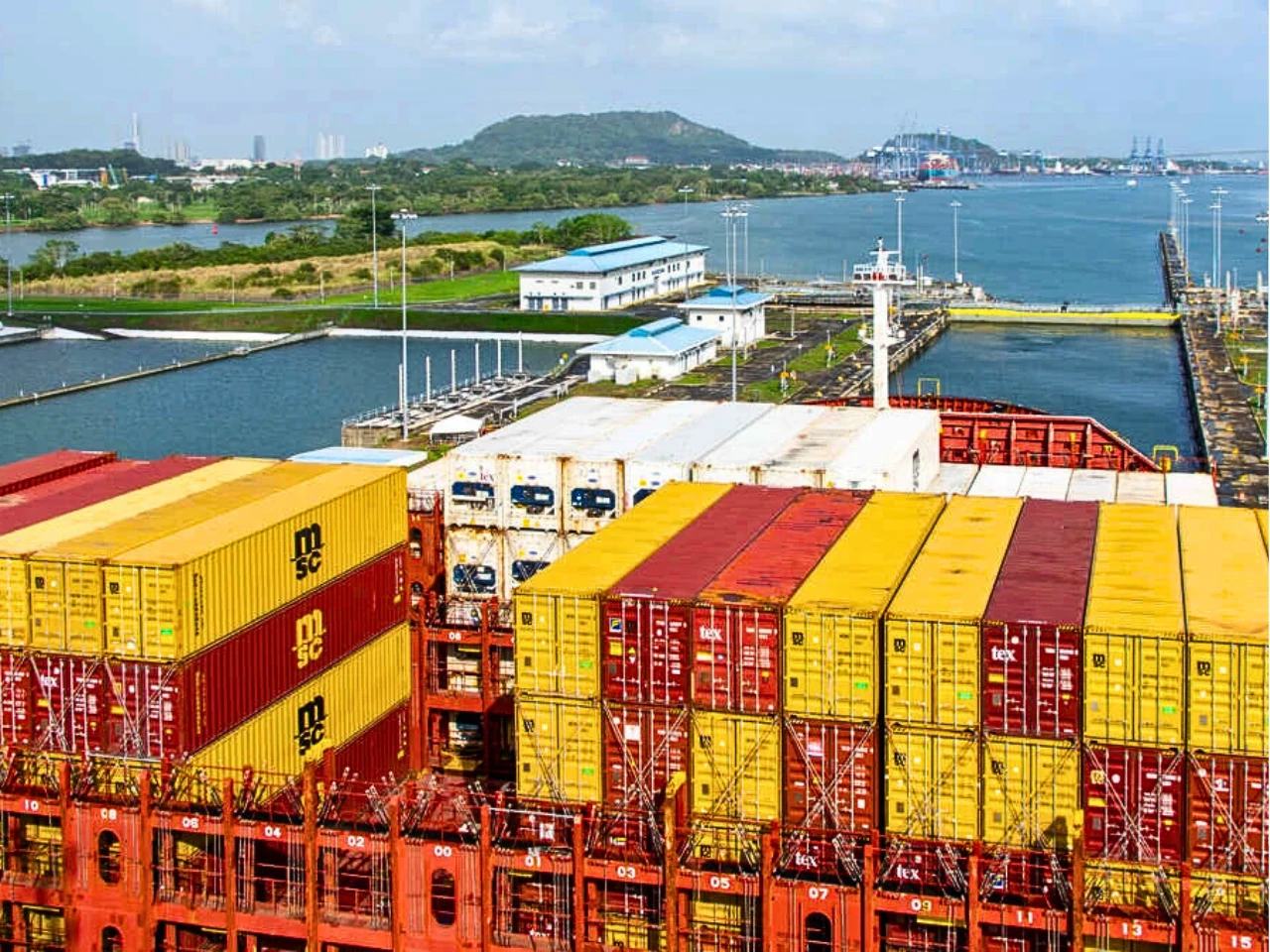
The liner shipping network of the world has been changing in an insidious yet significant way over the last twenty years. Though the amount of containerized trade has been growing and the number of nations that engage in scheduled services has been growing marginally, the tendency of countries that are directly linked by sea routes has been diluted. Maps and statistical distributions introduced in the analysis by Jan Hoffmann and Antonella Teodoro show a system that tends to be more centralized and organized around hub-and-spoke processes and that may be more difficult for less connected and smaller economies to deal with.
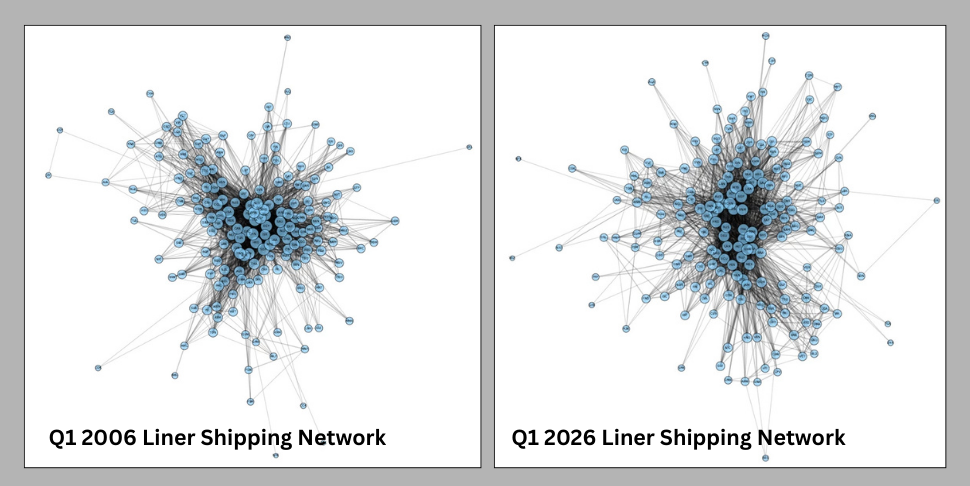
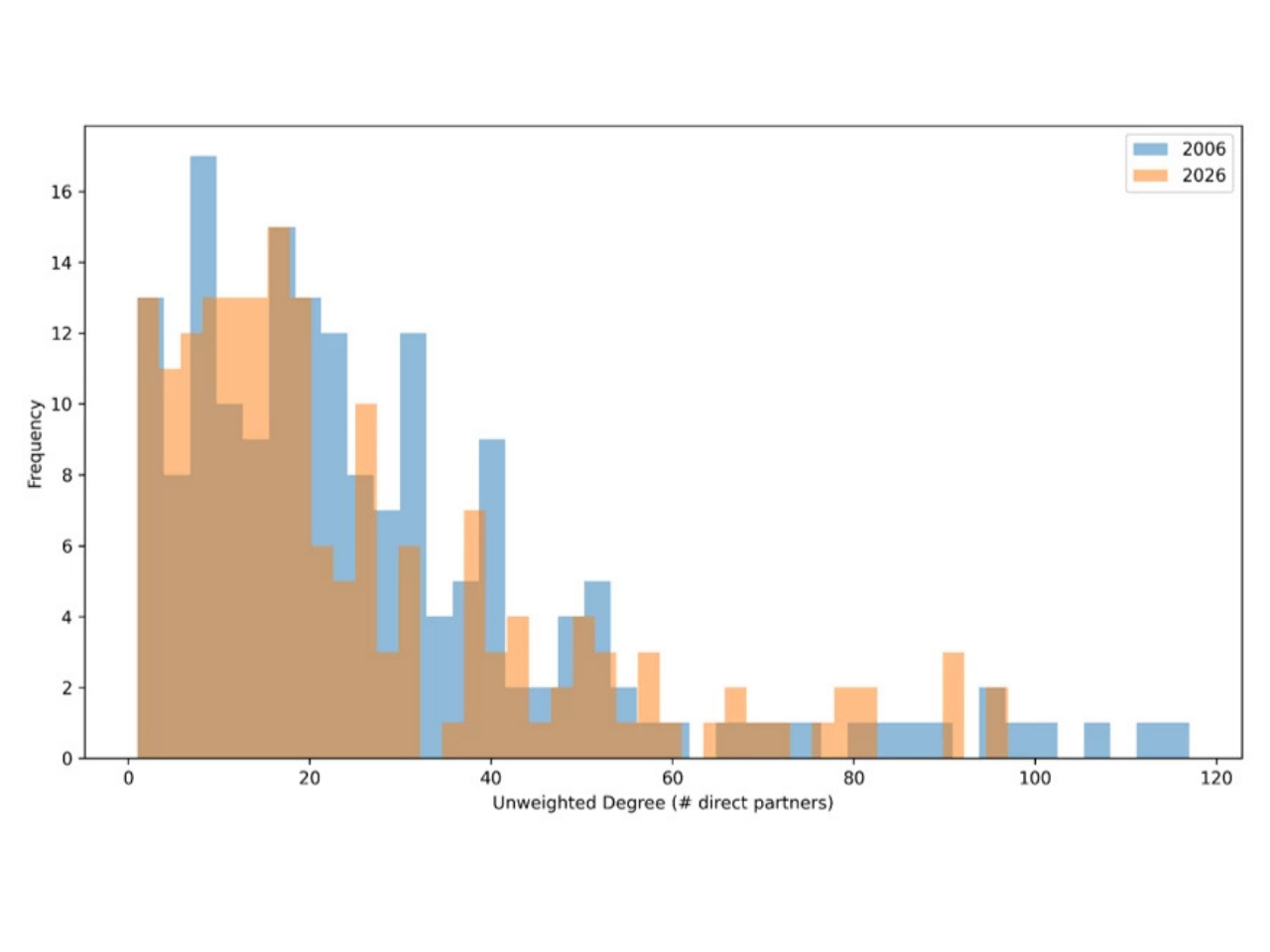
The initial two figures offer the network map of the liner shipping system in the world at the beginning of 2006 and that of 2026. The nodes are all countries, and the line indicates that there is at least one direct container shipping route between two countries. The connectivity (degree) is measured by node size, and the intensity of the relationship among the trading partners is measured by the clustering pattern. On the face of it, the two maps are dense and very interconnected, which implies further globalization of the maritime trade. Nevertheless, a more in-depth examination reveals that the 2026 network is a little bit more concentrated in large hubs. The central cluster seems to be more dominant and tighter in the middle, whereas the peripheral countries, small island states, and economies that are developing are poorly bonded at the periphery. The network had a wider distribution of the direct bilateral links in 2006. Although the overall number of countries involved in the direct country-to-country connections has also increased by 2026 (increasing to 178 countries), the number of direct country-to-country connections has decreased by 2,243 to 2,444. This means that involvement in the network has expanded, but the connectivity is more exclusive. Since the number of potential pairs of countries rose and the number of direct links reduced, the density of the network dropped to 14.2 percent compared to 16.2 percent. This practically translates to the fact that an increasing portion of the international trade traffic is now transited via intermediate ports and no longer goes directly between the origin country and the destination country. Logistics chains, when transshipment is used by more than four out of five country pairs, are more dependent on big ports and carrier alliances. This has the ability to enhance efficiency in routes with high traffic, but it also tends to heighten congestion vulnerability, disruptions, and market concentration. Reduced direct partners in countries.
Continue reading this executive analysis
This in-depth analysis is available exclusively to EP Prime members. Subscribe to unlock the full article and enjoy ad-free reading.