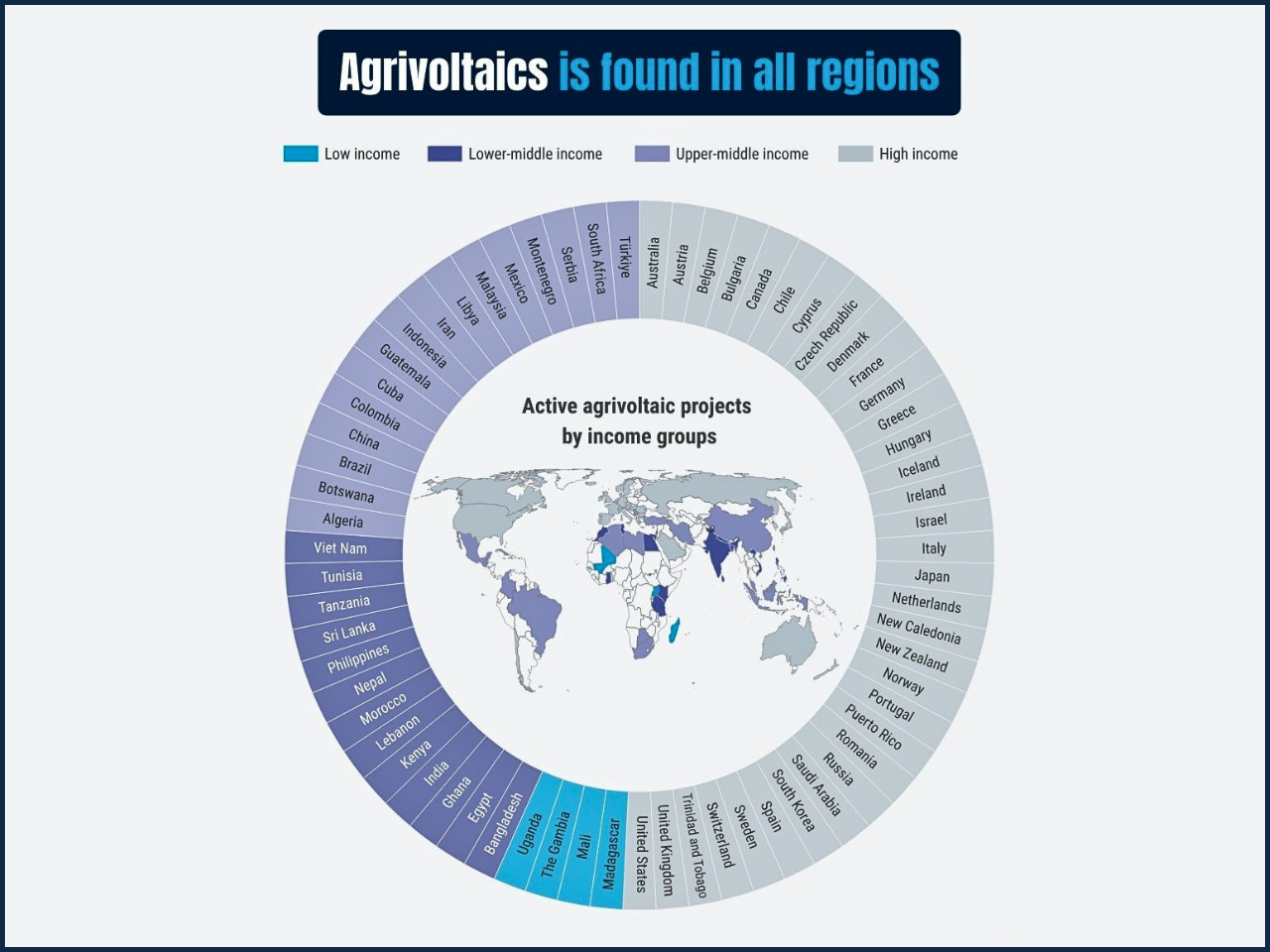
The agriculture and energy sectors have traditionally viewed each other as competitors in developing economies when it comes to land. However, a new method called “agrivoltaics” has emerged as a means of generating both solar power and growing food from the same piece of land, thus challenging this view. The International Finance Corporation (IFC) published a paper in March 2026 that describes how agrivoltaics has changed globally and what is needed to advance this industry. It was estimated that there would be between 22.8 and 14 GW of installed agrivoltaic systems globally by 2024.
To compare, 14 gigawatts equal 26 million solar panels or 4,000 wind turbines, equivalent to a utility wind farm. The countries that are integrating the technology are expanding from low- to high-income countries, including Germany, Japan, the United States, Mali, and Madagascar. There are two main ways to create economic benefits from the implementation of an agrivoltaic system. They can use the sun’s energy produced on-site for irrigation, refrigeration, processing equipment, and lighting. They have the potential to sell surplus electricity to the grid, generating extra income. At the same time, the shade from the solar panels provides optimal growth conditions for shade-sensitive crops like lettuce and berries, as well as for animals such as sheep and goats.
There are two principal designs that dominate the landscape. An overhead design allows for panels to be placed above the crop and provides high levels of land-use efficiency (153-178%), as it produces both solar and agricultural products from the same piece of land. An interspaced design allows for vertically mounted panels to be placed between rows of crops and permits for easy movement of equipment used to grow the crop. Having easy access to farm equipment allows the interspaced model to achieve efficiencies ranging from 108 to 123%. What works best for your needs will depend upon many variables, including but not limited to the type of crop being grown, local climate conditions, accessibility to mechanized farming equipment, regional electrical rate structures, etc.
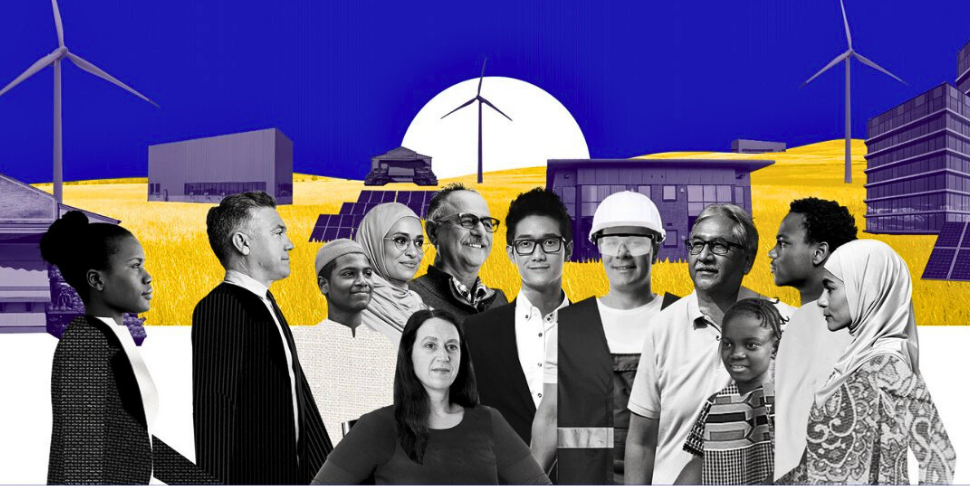
Agrivoltaics grants more than just income-generating opportunities; it also provides substantial environmental and resilience benefits. In at least one study, soil evaporation is decreased by the solar panels, and moisture is conserved by 14 to 29 percent, which is significant in the regions where water is becoming increasingly scarce. Panels also provide a degree of extreme weather protection from damaging hail, heavy winds, and extreme rainfall, becoming even more useful as extreme weather events become more common. Panel temperatures can also be controlled beneath the panels, providing frost protection in cooler seasons. The technology also creates employment. Jobs are created in three areas: on-farm, in panel installation, maintenance, and repair; additional farm employment due to increased and diversified food production; and off-farm employment, such as logistics, grading, and distribution within the wider agribusiness supply chain.
Agrivoltaics has strong potential, but some field challenges remain. While originally high installation costs represent a major limitation to widespread adoption of agrivoltaics, particularly among smallholder farmers due to their typically low access to funding or capital for installing these technologies. Additionally, there are few countries where the regulatory structure has allowed dual land use, creating uncertainty for those interested in investing in agrivoltaics. Finally, connecting a farmer’s electricity source to the national grid may require additional investments in infrastructure and/or expertise.
This will take coordinated action to overcome. Governments have the opportunity to create clear and solid legal frameworks for combined land use for both agriculture and energy. There can be a bigger supply of credit from financial institutions, such as development banks, to smaller operators. With its AgriConnect program, the World Bank aims to promote smallholder farmers' inclusion in value chains. Agrivoltaics can be a very powerful tool for the emerging markets if the policy environment is supported by the needed investments, bringing together several solutions at once for food security, energy access, water conservation, and rural employment.