The WFP’s ‘war shock’ warning plays out: as the Middle East crisis leaves millions on the brink of starvation, our latest report details the catastrophic implications. Three months ago, the UN World Food Programme (WFP) warned that prolonged and expanding conflict in the Middle East could push millions into starvation, in one of the most stark warnings of a ‘war shock’ to the global food security situation we have ever issued.
Today, that warning is a reality
Our latest analysis of three countries severely affected by conflict in the Middle East demonstrates how the situation is already altering the landscape of food security in some of the world's most fragile economies.
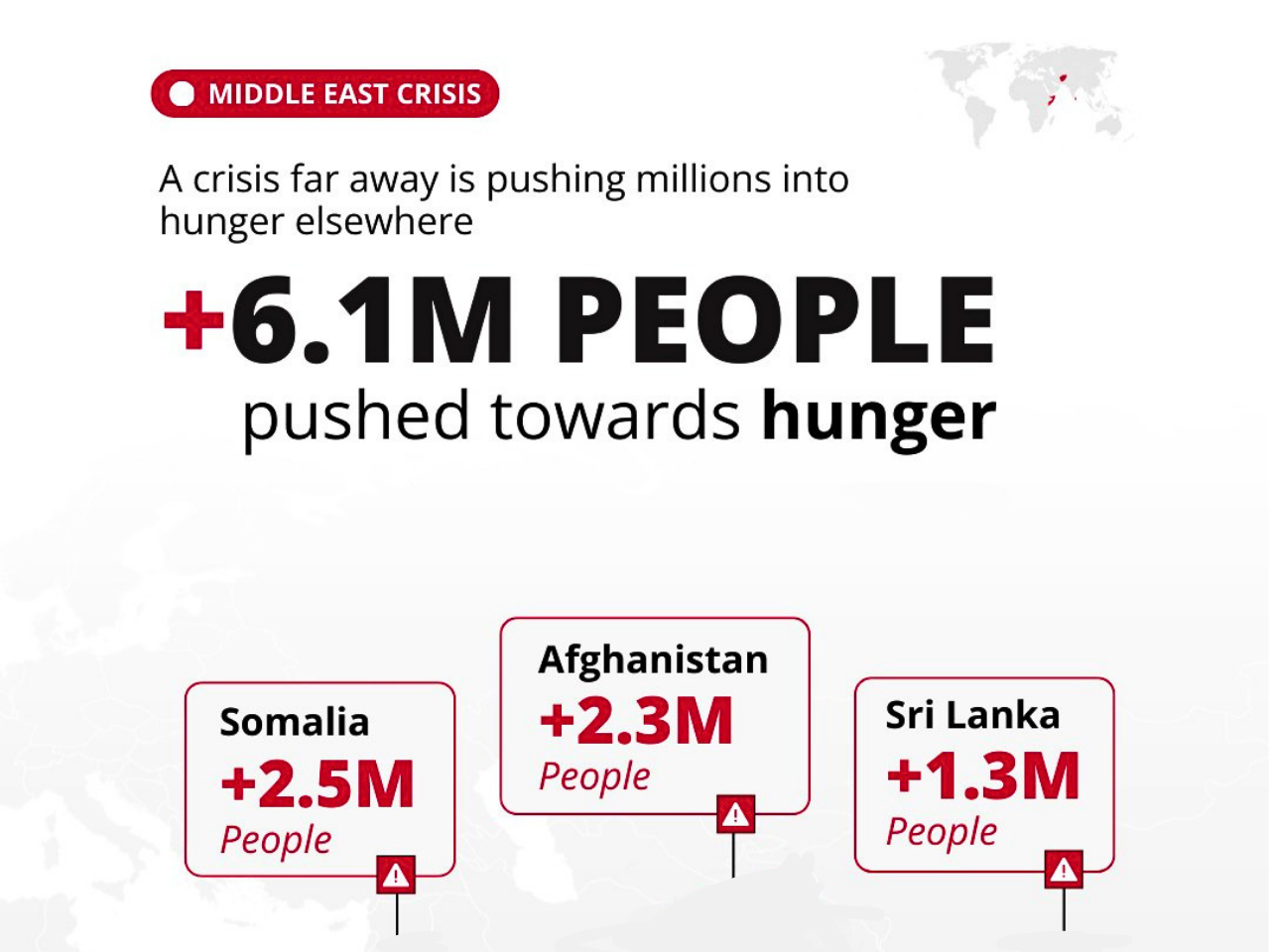
At the time in March, the WFP assessed that 45 million people could be thrown into food insecurity by June if fighting continues with oil prices holding above US$100 per barrel. This is the exact scenario now underway. WFP's report, "Food Security Under Pressure: How the Middle East Crisis is Impacting Vulnerable Countries," provides an update, based on updated modeling. We see 2.5 million more people in Somalia are in food insecurity, 1.3 million more in Sri Lanka, and 2.3 million more in Afghanistan, pushed into acute food insecurity as a result of the conflict. "The world only listens to early warnings if it acts upon them," stated Jean-Martin Bauer, WFP Food Security and Nutrition Analysis Service Director.
"We knew this conflict could create conditions where millions of people are on the brink of starvation. We are now witnessing it unfolding in real time. In many cases, it is those furthest from the immediate conflict who are suffering the most acutely, because food is becoming increasingly out of reach.”
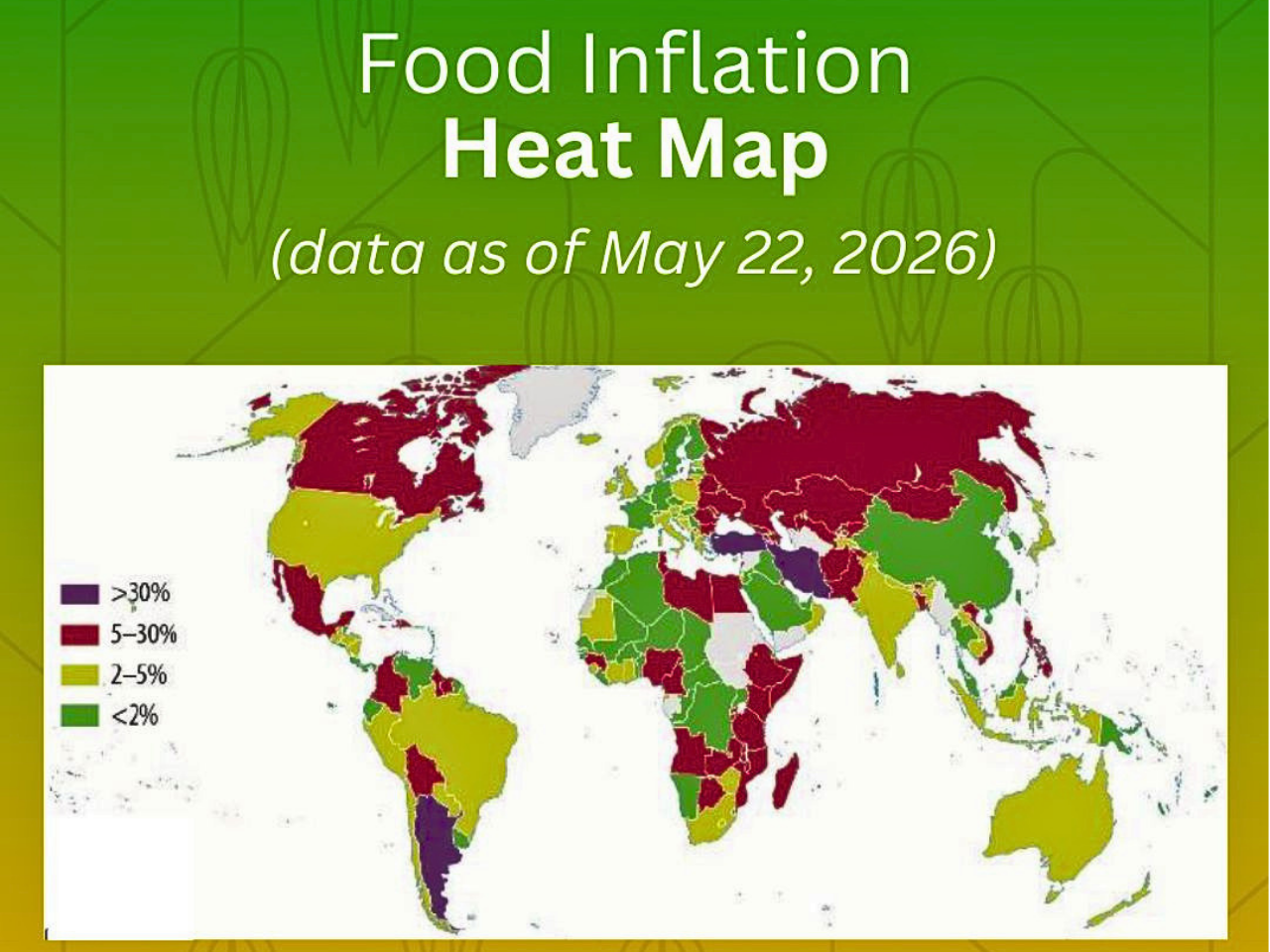
Several countries are at the epicenter of the shock, all sharing a high vulnerability: dependency on imports, particularly fuel, fertilizer, and food, on top of conflict, climatic stress, or fragility at home. For example, in a war and drought-plagued Somalia that already imports almost all of its fuel and most of its cereal, nearly 60 percent of households could struggle to afford basics, up from 47 percent last year, WFP found. In Sri Lanka, which is still struggling to recover from a major economic crisis, people’s ability to cope is being hit in several ways simultaneously; some 60 percent of the country’s total energy requirements are linked to the Middle East, and many of the remittances and export revenues received depend on Middle East prices. The salaries available today can’t support the rises in fuel, fertilizer, and food that workers are facing today. Afghanistan faces an additional impact on its hungry population if its border crossing to Pakistan doesn’t open up for prolonged periods. Coupled with a more general crisis across the region, this could lead to more millions falling into hunger, adding to the almost 14 million who already do so.
The analysis also revealed that a broadening and not just a worsening in vulnerability could occur. The urban poor and pastoralist communities, for example, could be vulnerable for the first time, as they too may struggle to purchase what is available on the shelves. “I think the impact in the next months could get even worse,” even if tensions de-escalated. “Farmers right now are sowing in fields under enormous stress and fertilizer and fuel prices; that is a recipe that has a negative yield impact on the crops and will push up food prices down the line. Even if we end the conflict tomorrow, we will be dealing with damage that is irreversible,” warned Bauer. “The impact will continue much beyond the conflict being finished.” WFP also faces a “triple threat of increasing needs, increasing delivery cost, and dwindling funding," the report said. “The WFP will miss its targets this year, and it projects it will be reaching fewer than what was originally projected for 2023,” Bauer said, and six more months of conflict could lead to nearly “10 million more people deprived of our support.” “WFP is appealing for immediate additional resources so that more hungry families are not pushed into deep starvation.”