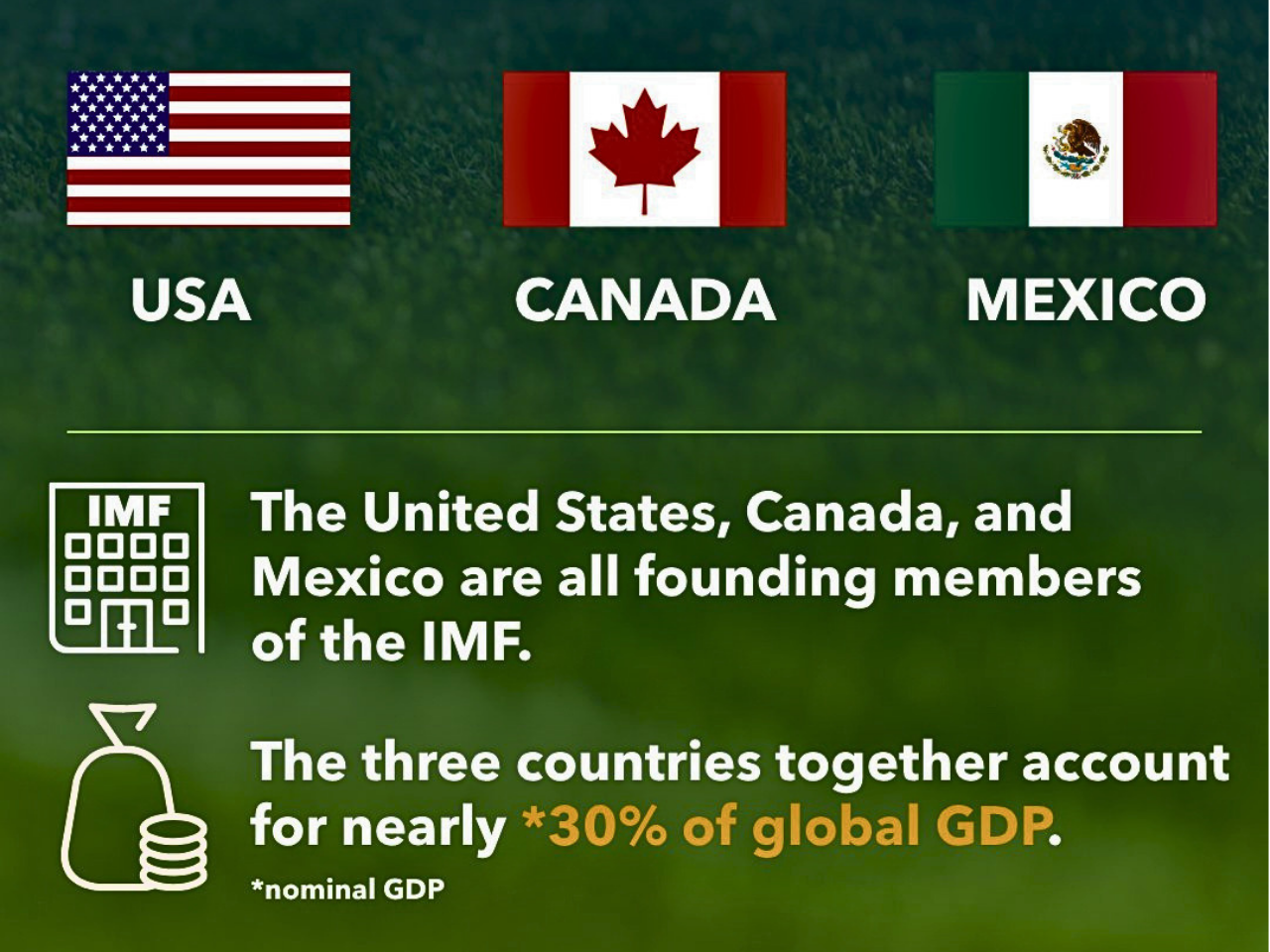
For the First time ever, Mexico, Canada, and the United States will co-host the FIFA World Cup in 2026. The International Monetary Fund (IMF) made the event notable by emphasizing the economic impact of this collaboration, which is shared by the three host nations accounting for about 30% of the nominal GDP of the world.
In addition to their sporting exploits, all three countries have historical ties to the IMF, with the first three years of its existence being the founding years under the name of the International Financial Fund. It’s a historic tournament, and this economic tie between the two sides brings a new twist to it.
In line with the event, the IMF introduced its “Beyond the Pitch” series, which will explore IMF data and analysis to uncover the financial and economic narratives behind the 2026 World Cup. The campaign’s goal is to provide audiences with a greater understanding of the connection between sport and economics in a global context.
The IMF will be publishing continuous content throughout the tournament on topics like trade, growth, and development in the host countries. The project highlights that as well as being sporting events, large-scale sports occasions can also be significant economic drivers that have long-term implications for countries hosting the sporting event and the world economy.